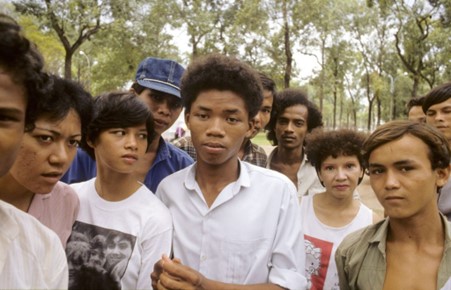
Approximately 100,000 children of American military men and Vietnamese women, referred to as “Amerasians,” were born during and just after the end of the Vietnam Conflict. They faced tremendous difficulties, were labeled as ‘children of enemy,’ prohibited from going to school and were left out on the streets. Many lost their mothers due to the fear of the cruel new communist government. Many mothers left their children in orphanages or gave their Amerasian children away and disappeared. Years after the war’s end, the children begged in the streets, worked as street vendors, sold their bodies or committed street crimes. Many Vietnamese escaped via boat, risking their lives to make their way to foreign lands. The United Nations and the United States of America took action and the Orderly Departure Program (ODP) and Amerasian Homecoming Act of 1987 created an opportunity for Amerasians and their families.
A desire to help all Amerasians to search for their American GI father before time run out and bring hope to Amerasians who still left behind in Vietnam to return to the U.S would lead Jannies Nguyen, the founder and director of Amerasian Children of Vietnam Veterans, to become one of the few that has guided Amerasians to their fatherland.
The Amerasian Transit Center (ATC) opened in January 1990 to facilitate in processing Amerasians from Vietnam to the United States. It was based in opposite Dam Sen Park in the outskirt of Ho Chi Min City. The center could house 1,000 Amerasians and contained small houses and billets where the Amerasians and their families resided while going through the interview process. The ATC had its own system of schools, workshops, common eating places, and a reception area for visitors and foreign dignitaries. The average processing time took 6 months, for some even longer but this microworld helped Amerasians to be productive and prepare for the departure from their birthplace. For others, the wait was even longer, some stayed there almost 5 years and when the center closed in 1997, it also dashed the hope for many of the remaining Amerasians.
Jannies Nguyen was one of the Amerasian who resided at ATC-Dam Sen Park for 6 months including her family from January 1990 to June 1990. She met many other Amerasians that she never knew before in ATC-Dam Sen Park. Most Amerasians she met, spent their time outside the ODP office, waiting to apply for an interview or waiting for the interview to immigrate to the USA. When they were not spending their time outside the ODP office, they lived in the ATC. While she stayed at the center, she saw the maltreatment Amerasians faced by their own countrymen; she was angry and scared. She was young and helpless. She didn’t know what to do but just being frozen and stared at those Vietnamese men abused her Amerasian brothers and sisters. She told herself, one day she will help her Amerasian brothers and sisters change their futures.
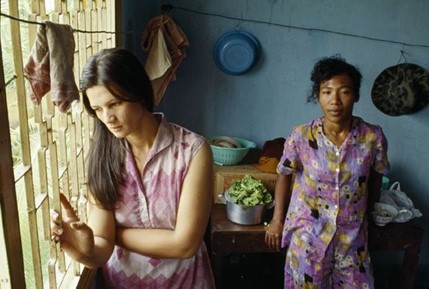
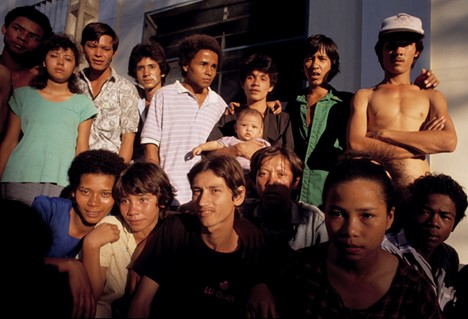
Philippine Refugee Processing Center, created in 1982 to help the boat people from Vietnam, Laos, and Cambodia. It contained space for 11,000 people in 10 areas.
Later in 1988 the first Amerasians started to arrive and ended in 1993 when the main group for USA came in large numbers. Every family had their own room, sometimes shared with a single person. They had their own kitchen, and for some even a backyard. While waiting to leave for the USA, a common activity was to study English and the way of living in the states. Most Amerasians waited 6 months before leaving for USA, waiting for their final destination. In the late 90’s the center closed down, and today it’s a tourist center.
Jannies Nguyen and her family transit from The Amerasian Transit Center (ATC)-Dam Sen Park in Saigon to The Philippine Refugee Processing Center in the Balanga Bataan, Philippines sometime in June 1990. From there, she reunited with some of the Amerasians that she met in ATC-Dam Sen Park, and she also met and made friends with many other Amerasians in the Balanga Bataan Camp in the Philippines
In December 1990, Jannies Nguyen emigrated to the United States with her mother and younger sister, settling in Oklahoma City, where she lives today with her husband and two sons. The hardships she faced in Vietnam only fueled her resolve and ignited a passion for serving the Amerasian community. Over the past 17 years, she has dedicated herself to uniting Amerasians, raising public awareness, and advocating for our shared cause. Although the Vietnam War has ended, our struggle to reconcile with the past and find our place in the world continues.
To support these efforts, she founded the non-profit organization, Amerasian Children of Vietnam Veterans. Their mission is to help Amerasians from Vietnam reconnect with their families, make peace with their past, and honor the sacrifices of their veteran fathers. They advocate for their right to U.S. citizenship and assist them through the immigration process, including sponsoring them after successful Embassy interviews in Vietnam.
Since 2007, she has collaborated with the Amerasian community in both the U.S. and Vietnam. My efforts have helped around 300 Amerasians by securing donations to cover medical expenses, establish small businesses, purchase transportation, repair homes, and facilitate DNA testing. Since 2015, our organization has helped over 100 Amerasians and their families successfully immigrate to the U.S. through DNA-facilitated processes.
DNA tests are brought to Vietnam and given to Amerasian who facilitates delivery to other Amerasians there and then taken back to the United States for the lab results. DNA tests have been a vital tool in locating fathers, dead or alive, or father’s families. Under the Amerasian Homecoming Act of 1987, Amerasians from Vietnam are able to leave Vietnam and enter into the United States once the DNA evidence proved an American father and information existed. As of 2024, almost every Amerasian that still left behind in Vietnam, has been DNA tested. The ACOVV team remains ready to help any Vietnamese Amerasian, whether in Vietnam or the United States, and military veterans to be united.
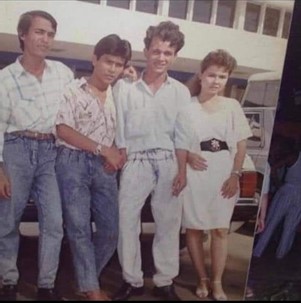
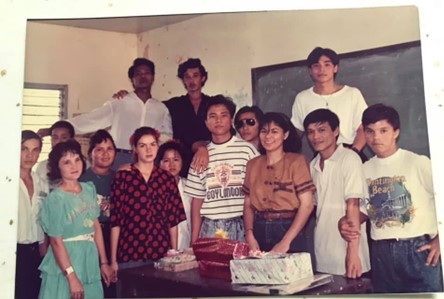
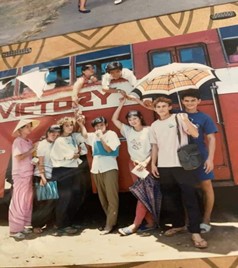
During his time in the Amerasian Transit Center (ATC) in Bataan, Philippines. She took several photos of the Amerasians and their daily lives there. If you know the names of these people below, or where they live in the USA or Vietnam, then please email her.
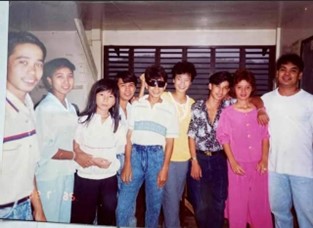
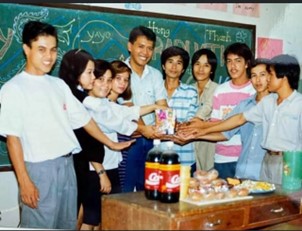
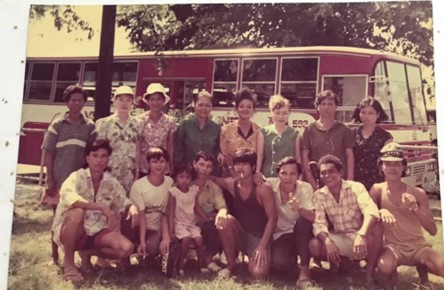
Director: Jannies Nguyen-1444 NW 24th St. Oklahoma City, Ok 73106. Email: jannies@acovv.org.
Amerasian Children of Vietnam Veterans, Corp. EIN# 37-1786449
Copyright 2024. Website.com. All Rights Reserved.